CalExplore Navigation Feature
Designed and developed a Caltrain extension for the Caltrain Administration to boost tourism and support small businesses by enabling seamless exploration through a swipe-based discovery interface with personalized, algorithm-driven recommendations.
Project Type
CalTrain Consulting Project
Duration
6 Weeks
Team
Carmah Hawwari, Shun Ueno, Bennie Nkwantabisa, Nadia Ansari
Relevant Skills
Figma, User research, Experience Design, Product Design, Prototyping
PRODUCT TRAILER
PROBLEM SPACE
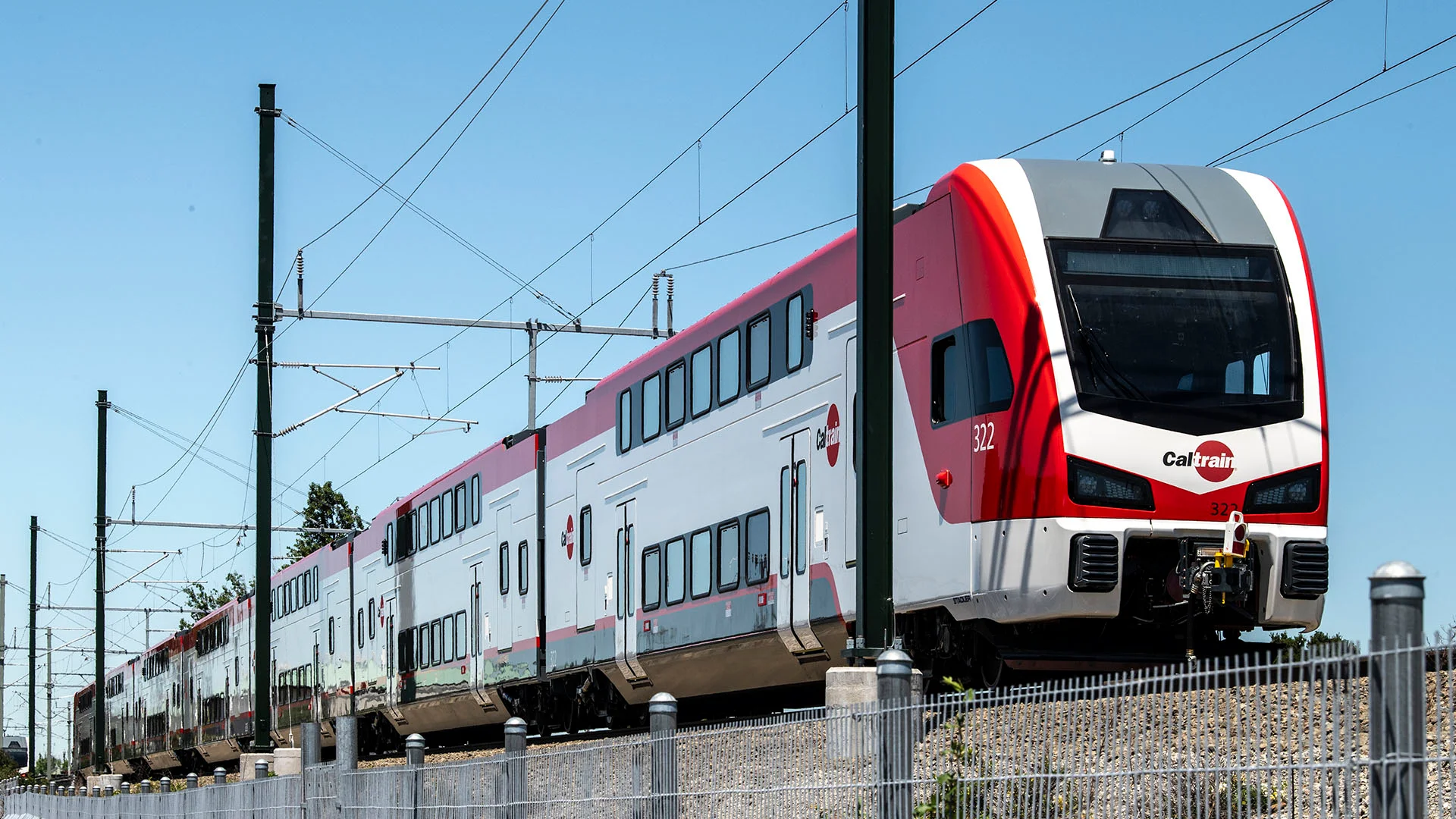
With the electrification of Caltrain, the administration sought to move beyond its identity as a commuter line. Historically tied to travel, the system struggled with underuse outside rush hours. Electrification created an opportunity to reposition Caltrain as more than transport.
DESIGN PROCESS
1
Need Finding & Research
2
Ideation & Iteration
3
Refining UI & Business Implications
Section 01
NEED FINDING & USER RESEARCH
We conducted in-depth interviews and multiple field visits to the caltrain station to understand the needs, frustrations, and behaviors of Caltrain commuters. This research revealed critical pain points, including communication gaps, limited exploration opportunities, and the desire for better local engagement, which guided our design decisions.
5 In Depth Interviews
Multiple Field Visits
TARGET USER
Curious Callie is an adventurous individual who uses Caltrain to explore surrounding areas in the Bay Area, frequently visiting family and friends
Callie is an explorer that enjoys trying new hidden gems such as restaurants, cafes, and shops in the bay area.
Frustration point: Feels like there is a lack of new or curated recommendations
Secondary Users
Local Business Owners
Tertiary Users
Commuters
Starting
They always go to the same Philz Coffee, but this week, Callie wants to try something new.
Trying
Callie suggests exploring new places, but Nadia is too tired to search and refuses to download Yelp or scroll Google Maps. Callie feels frustrated but doesn’t have time to either.
Conflicting
Tension builds as Callie reluctantly suggests Philz again to avoid conflict.
Quitting
They enjoy each other’s company at Philz for the fourth time this month but wonder what they’re missing by sticking to their lazy habits.
JOURNEY MAP
Section 02
IDEATING & ITERATING
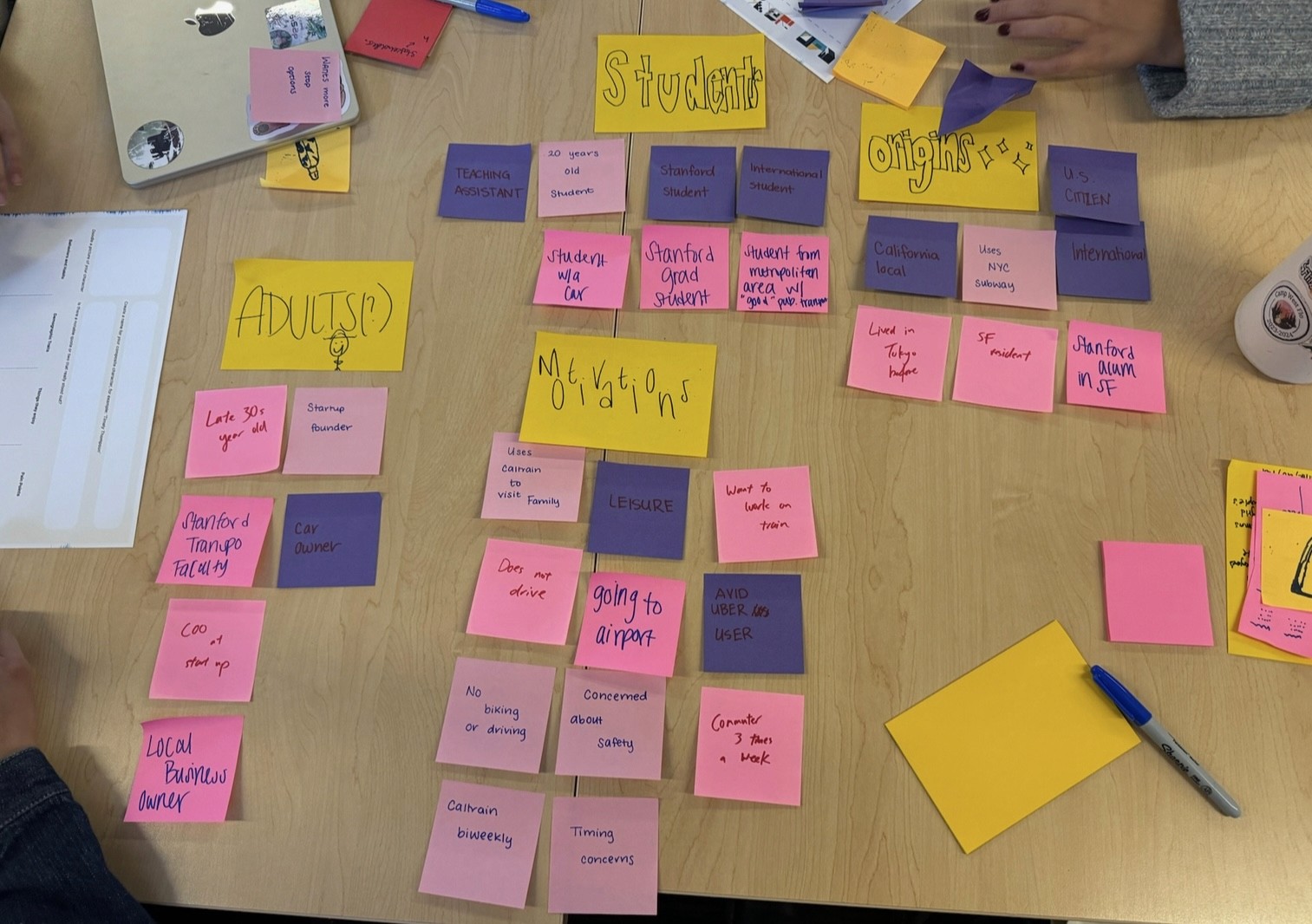
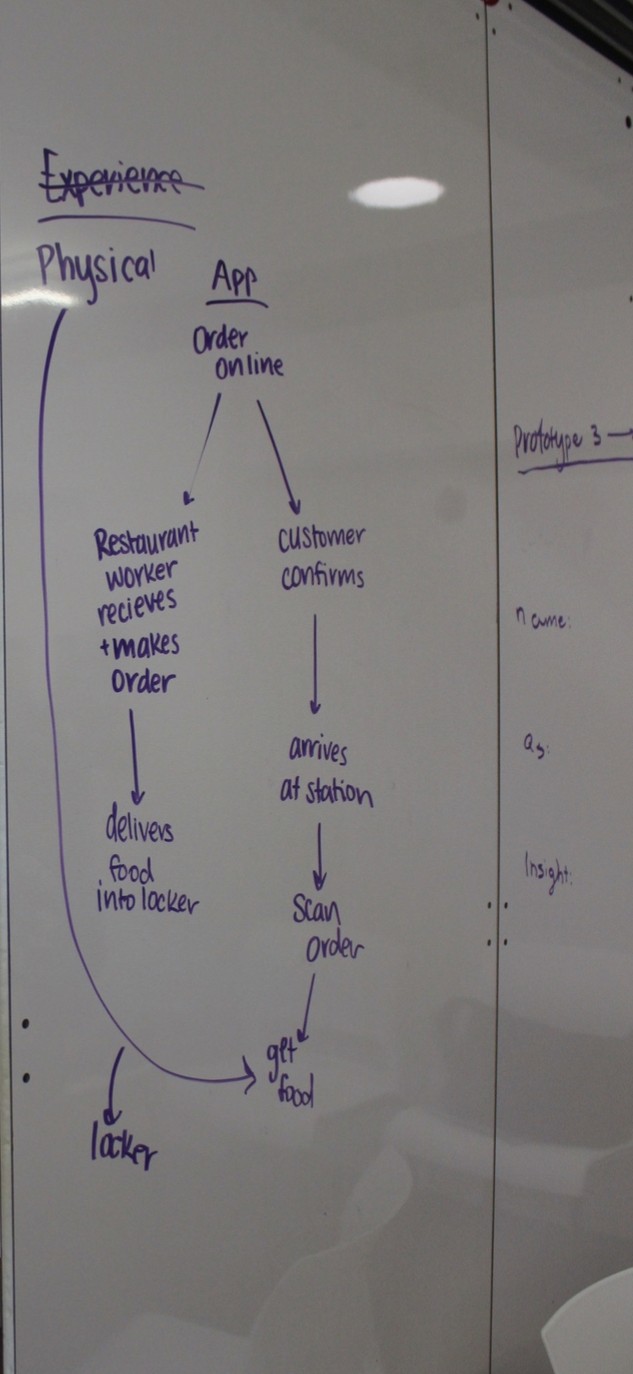
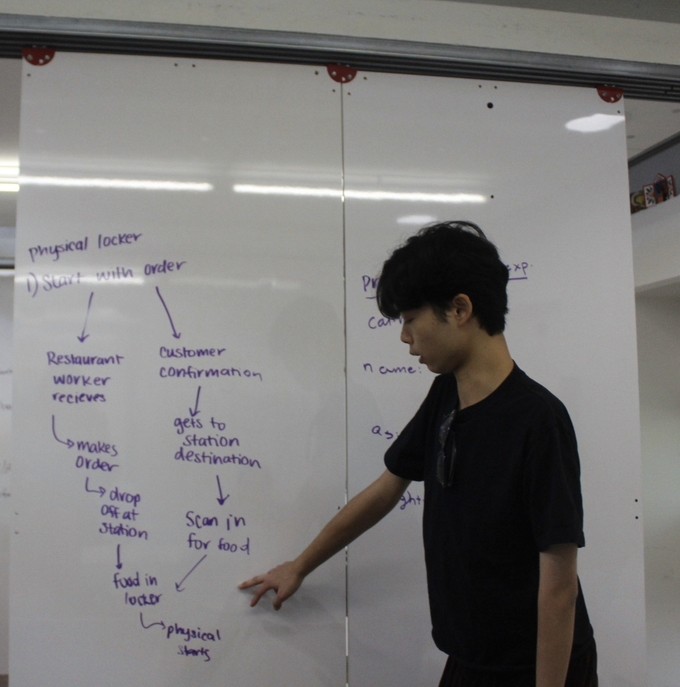
We began the brainstorming process by bouncing initial ideas off each other to spark creativity, followed by a brain dump to capture every potential solution. We then critiqued and refined these ideas through group discussion, identifying the most viable directions. Finally, we moved into rapid prototyping to quickly test and iterate on solutions that addressed the main pain point identified in our HMW statement.
CORE MECHANISM DEVELOPMENT
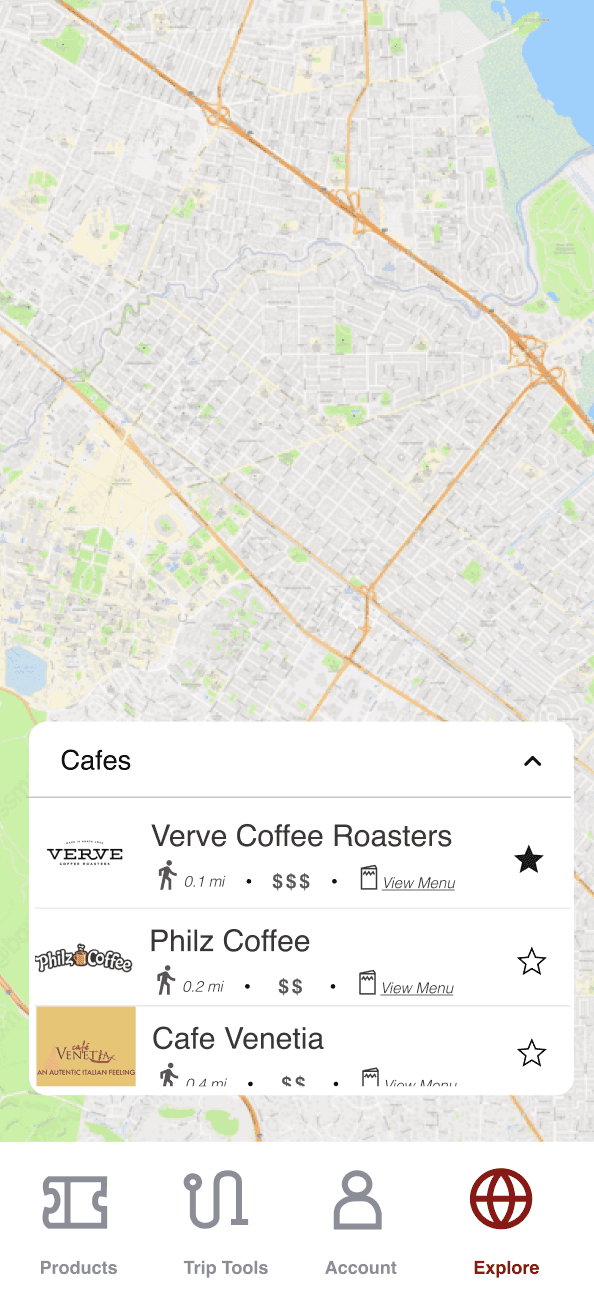
We initially started with a traditional map view featuring pins for cafes, restaurants, and shops, providing a comprehensive overview. However, this approach proved overwhelming and time-consuming for users seeking quick decisions, with a cluttered interface that required constant zooming and tapping. Moreover, its similarity to existing platforms like Google Maps and Yelp directly contradicted our goal of creating a streamlined and unique user experience
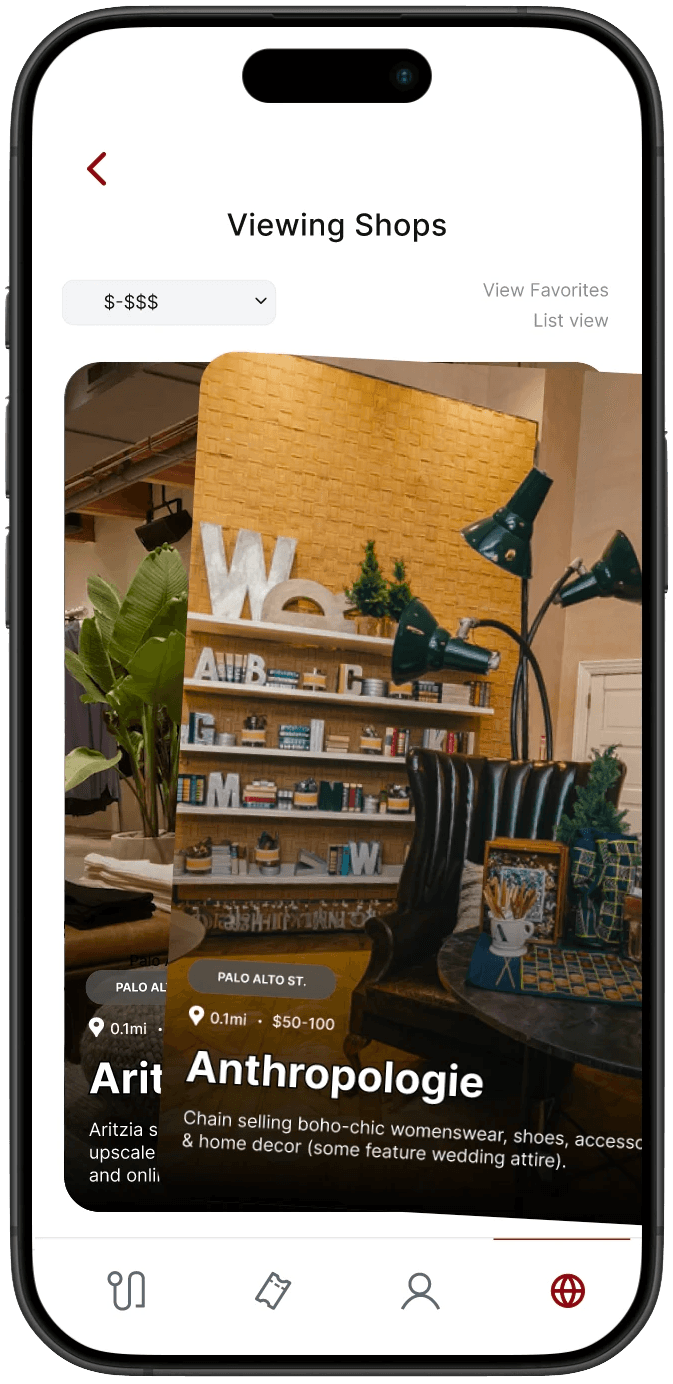
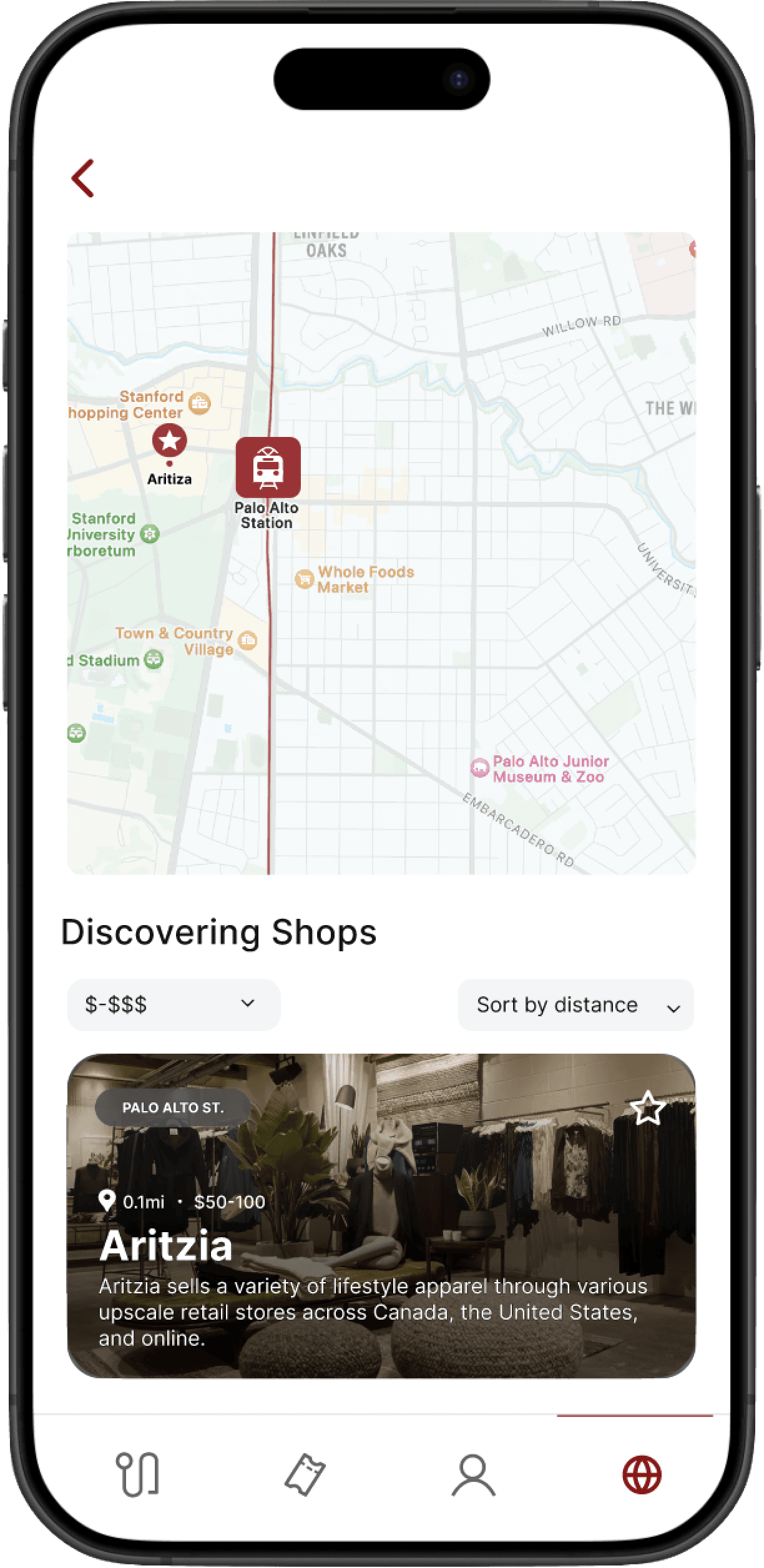
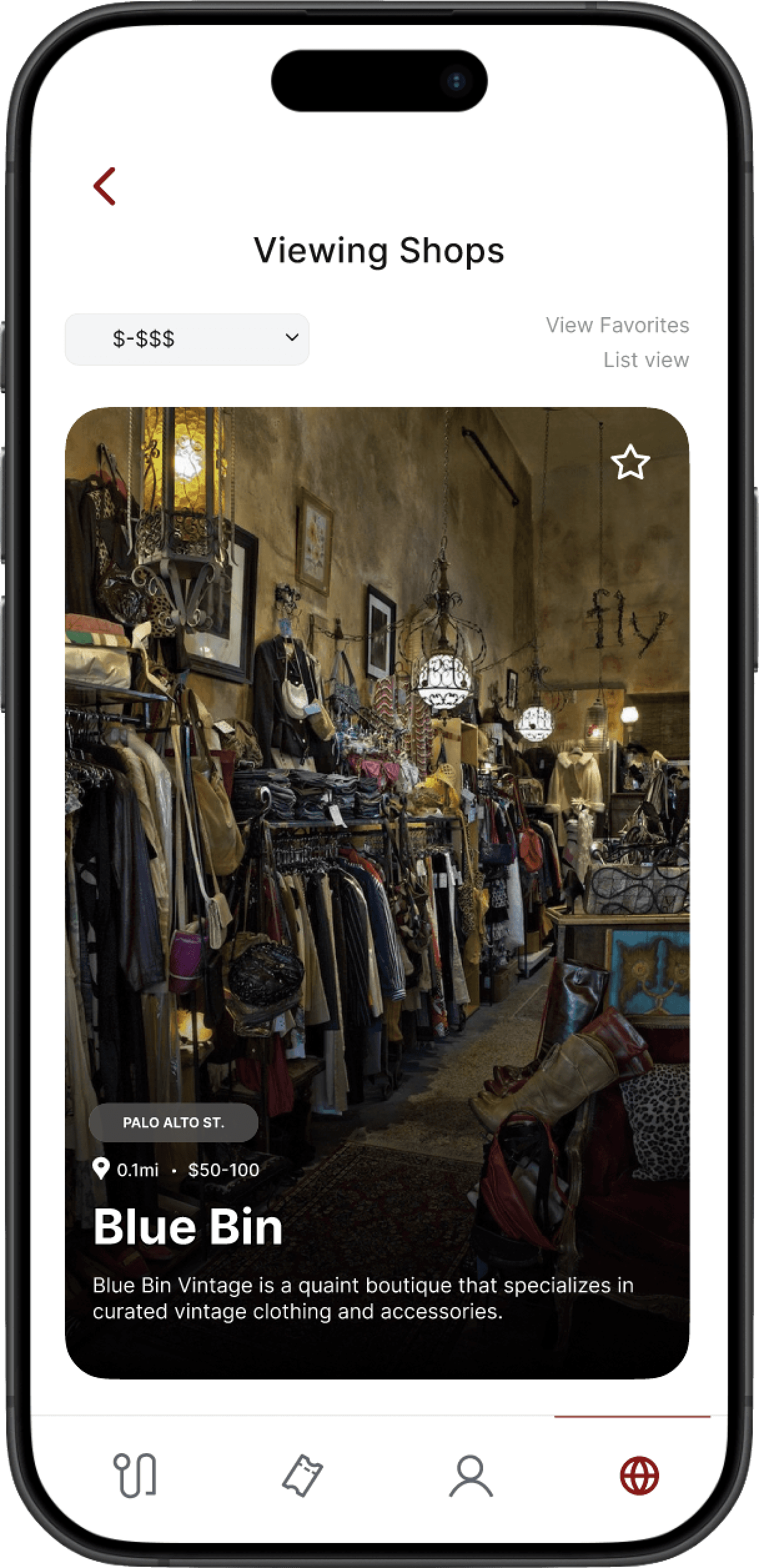
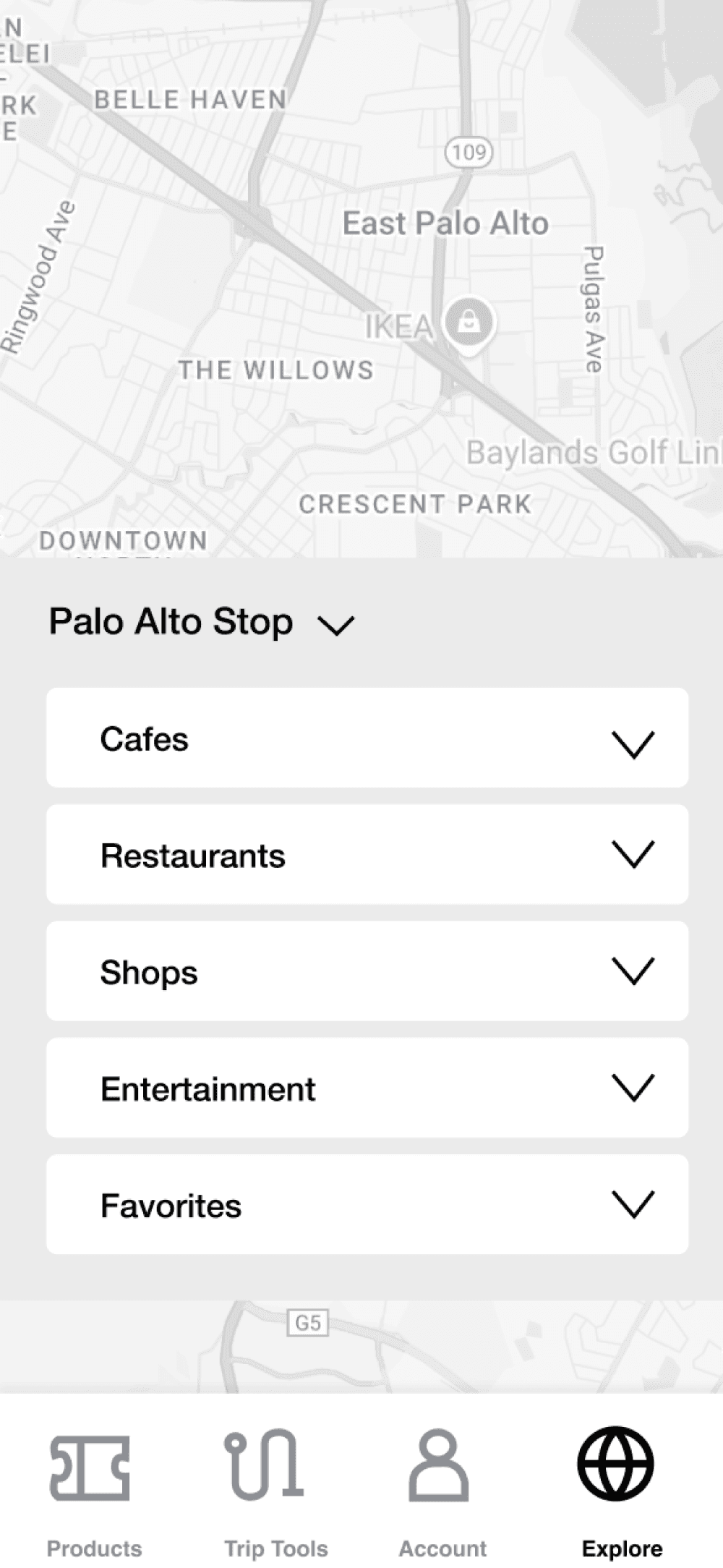
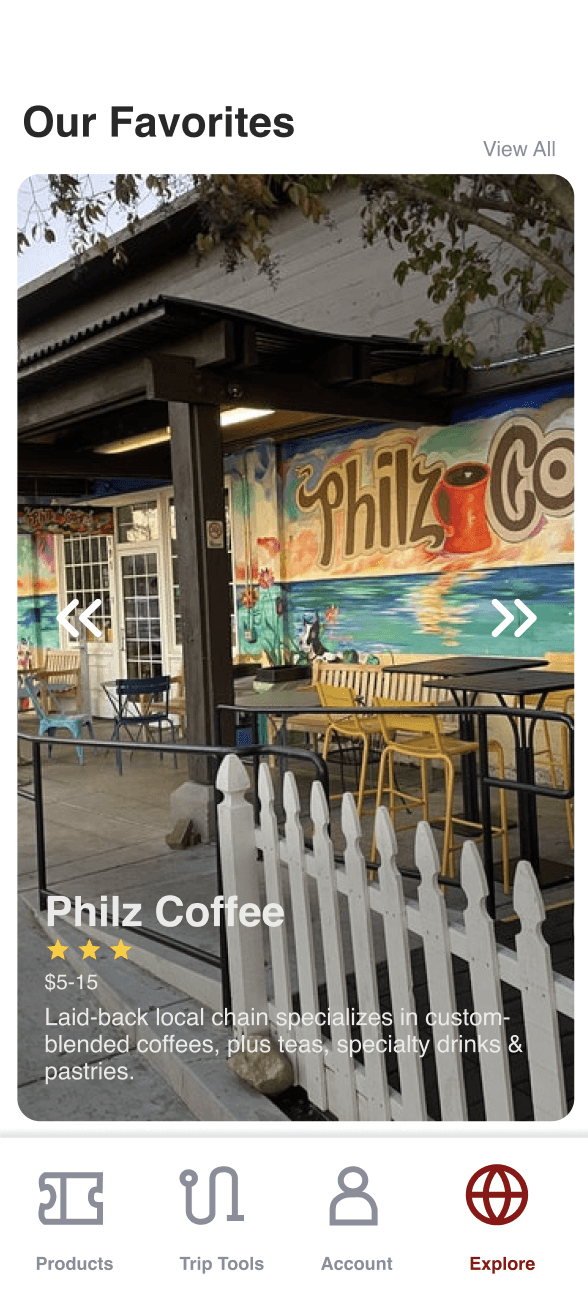
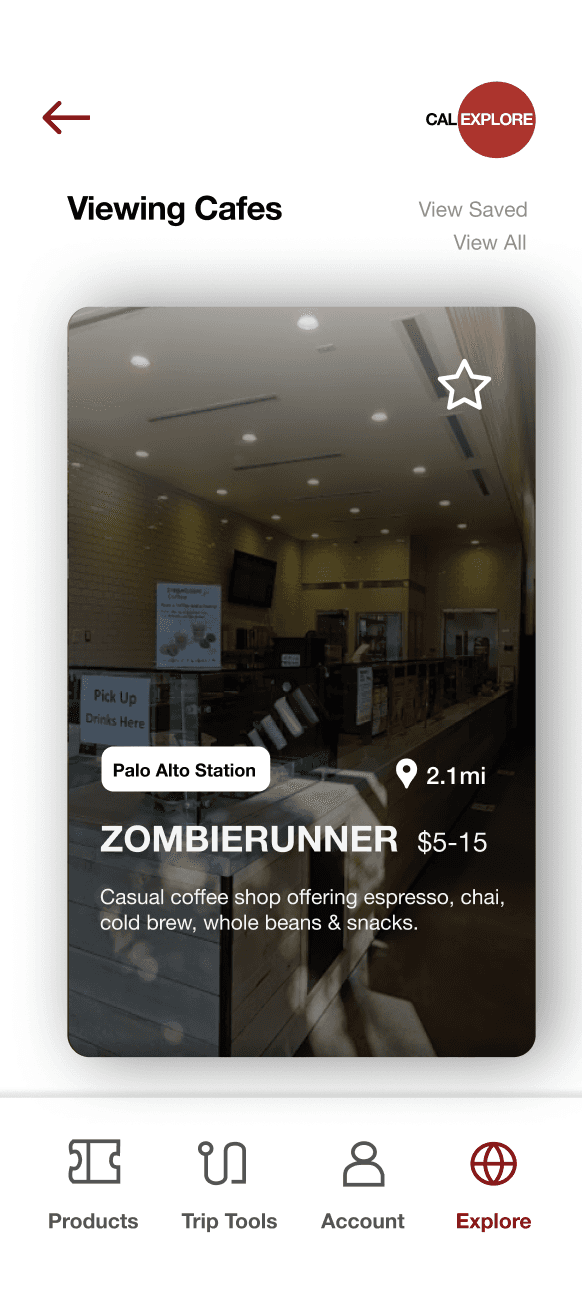
To address this, we introduced a swiping mechanism featuring a large card design that allows users to quickly scan key details, such as name, rating, and distance, without opening additional menus. Mimicking a horizontal card carousel with a Tinder-like functionality, this design minimizes cognitive load and streamlines decision-making, especially for users in a rush. Upon opening the CalExplore feature, users select their station and category, then swipe through curated recommendations with essential details like cuisine type, price range, and mileage prominently displayed. Once users select a recommendation, it seamlessly syncs with their preferred navigation service.
FIRST PROTOTYPE
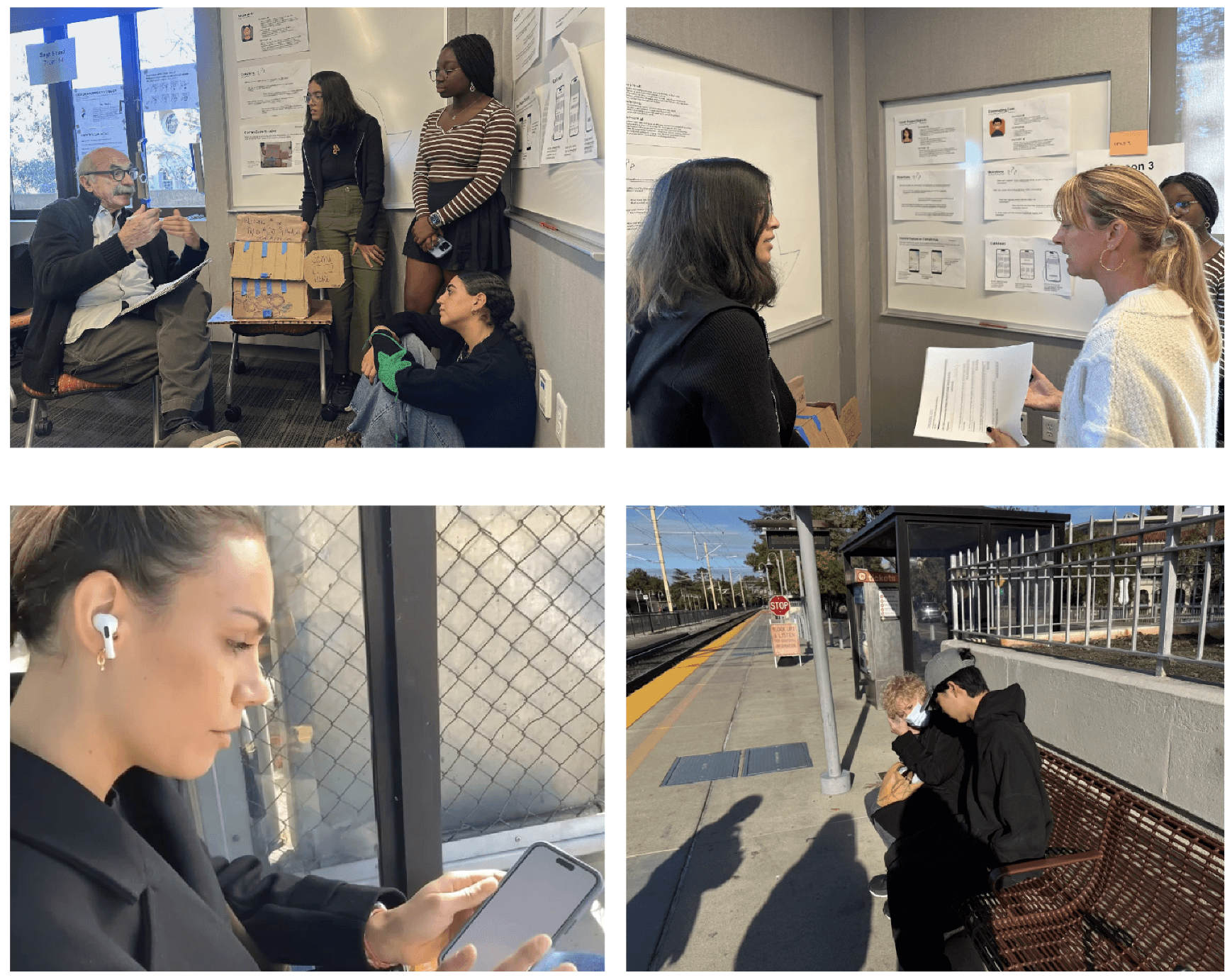
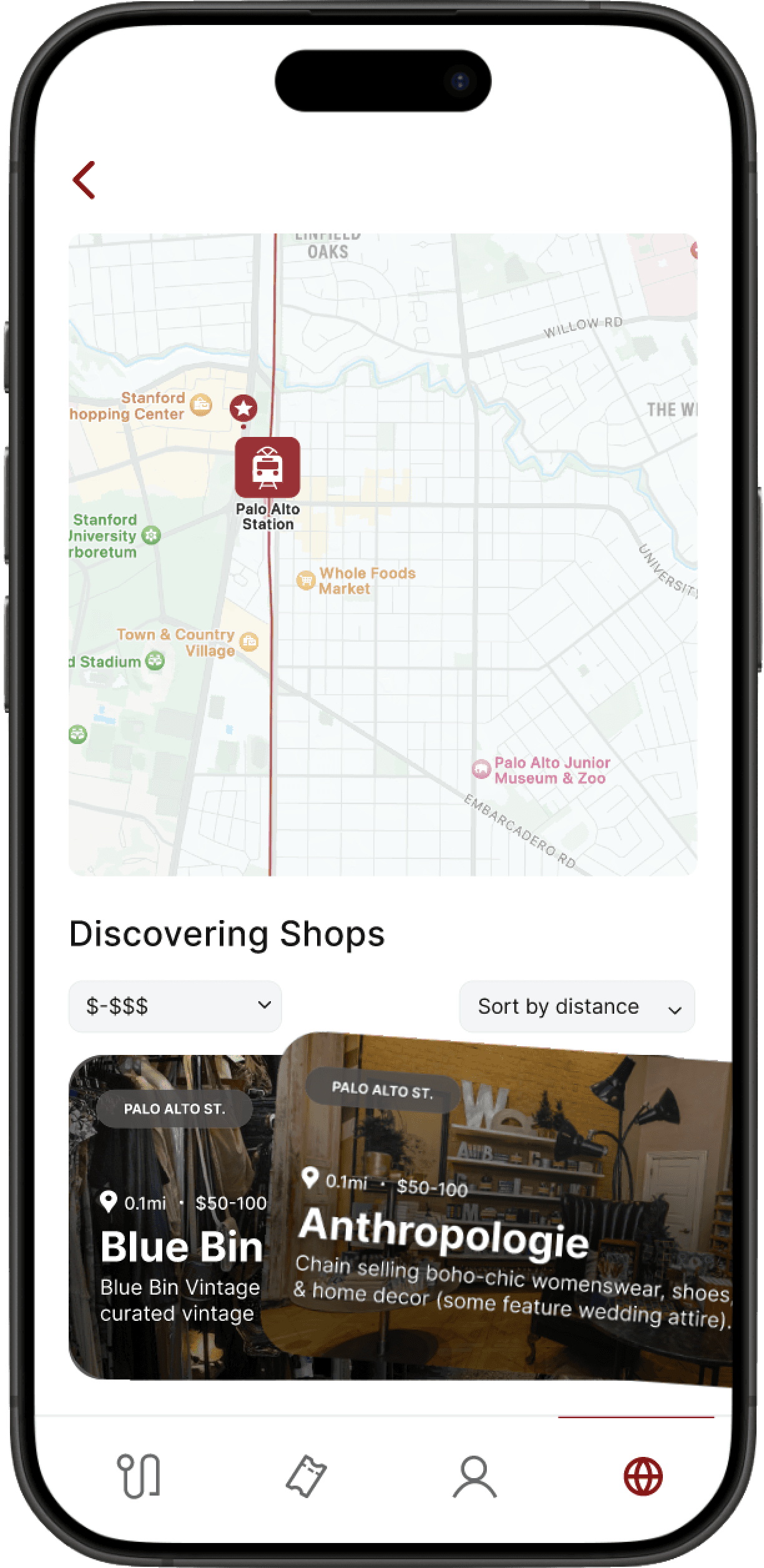
Users felt that the numerical distance displayed on the cards was not sufficient and wanted to be able to visualize the distance
Users wanted a system to narrow down options for restaurants
Users struggle to identify the most convenient mode of transportation from the station to their destination.
USER TESTING
Section 03
UI REFINEMENT AND IMPLICATIONS
Secondary Text
545454
Inactive interactive elements
F3F4F6
Text
Primary Accent
93000D
000000
Colors
Typography
Typography
Components and Icons
Grids + Spacing
Rows:
21 Rows
Margin: 50px
Gutter 20px
Columns:
6 Columns
Margin: 32px
Gutter: 16px
Helvetica Neue Bold
Helvetica Neue Medium
Helvetica Neue Regular
Helvetica Neue Regular
Helvetica Neue Bold
Helvetica Neue Regular
Primary Heading
Secondary Heading
Primary Body Text
Secondary Body Text
Action Text
Captions/Labels

Vietnamese
American
Thai
Greek
Japanese
Greek
Thai
American
Vietnamese
Japanese
Restaurants
Shops
Cafes


CALEXPLORE
View Selections
CAL EXPLORE
Final Heros
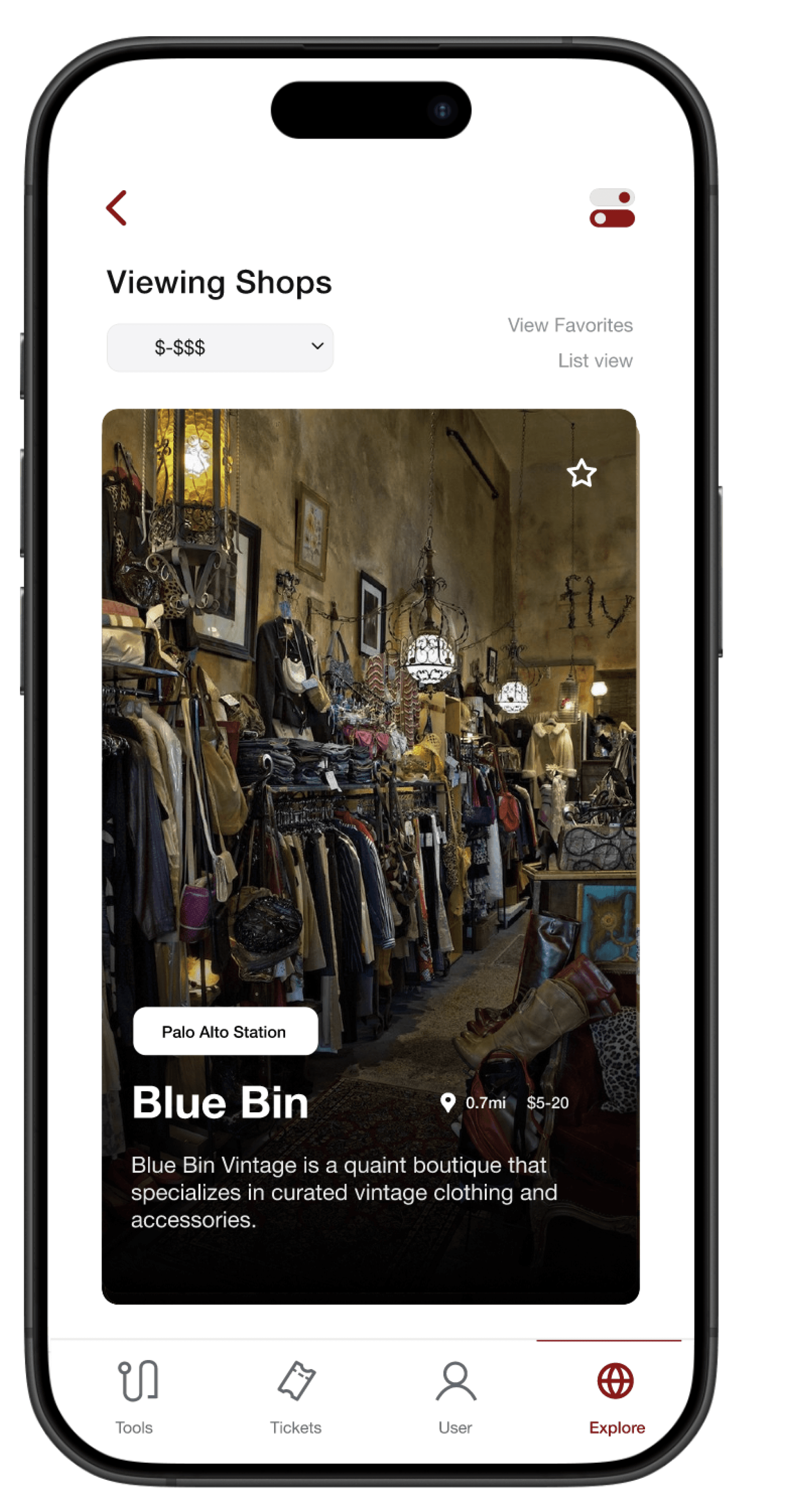

Enable users to tailor their searches to match their needs and chosen modes of transportation.
Allow users to visualize the distance between the recommendations and their caltrain stop
Map View
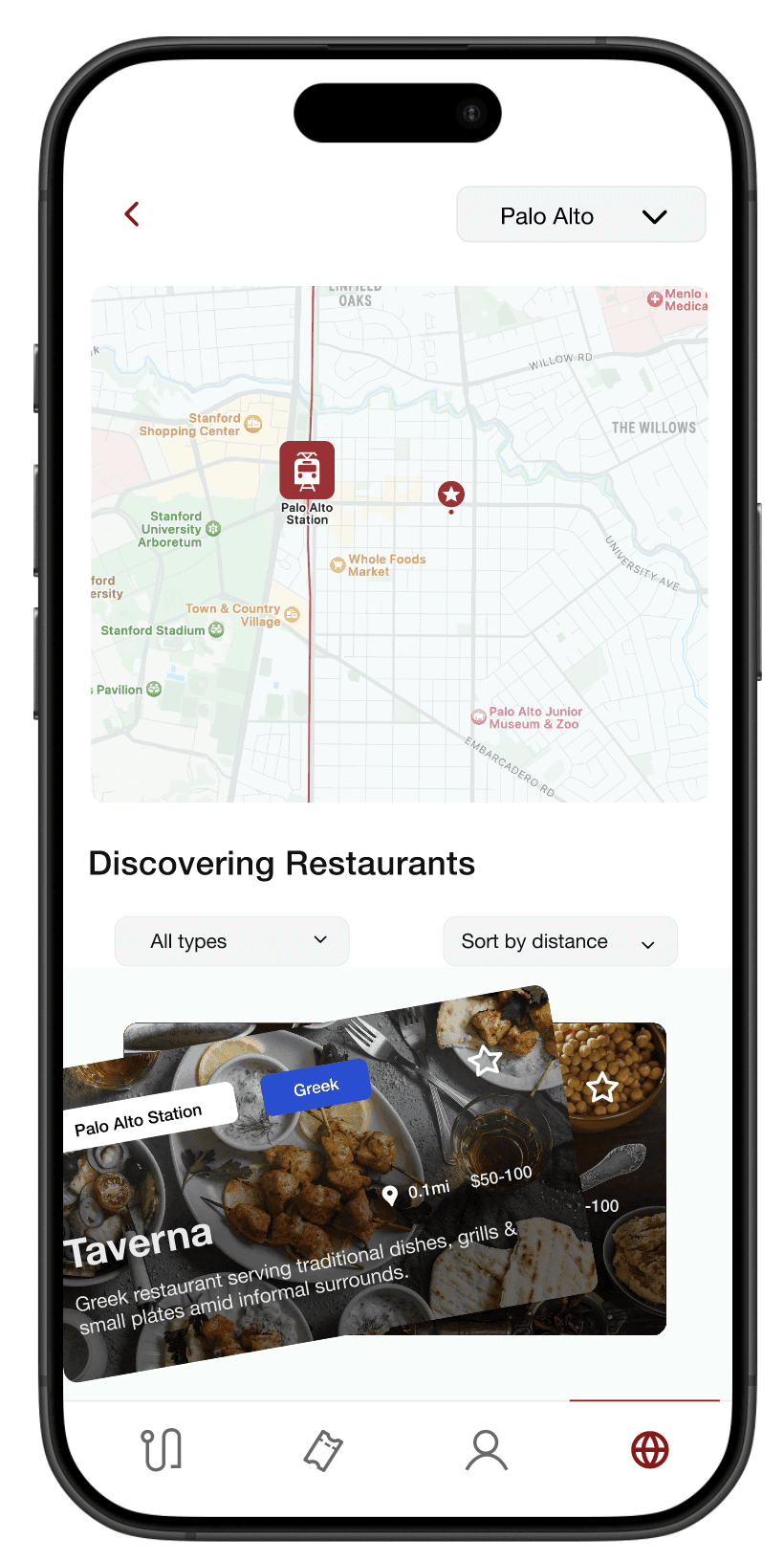
Station View
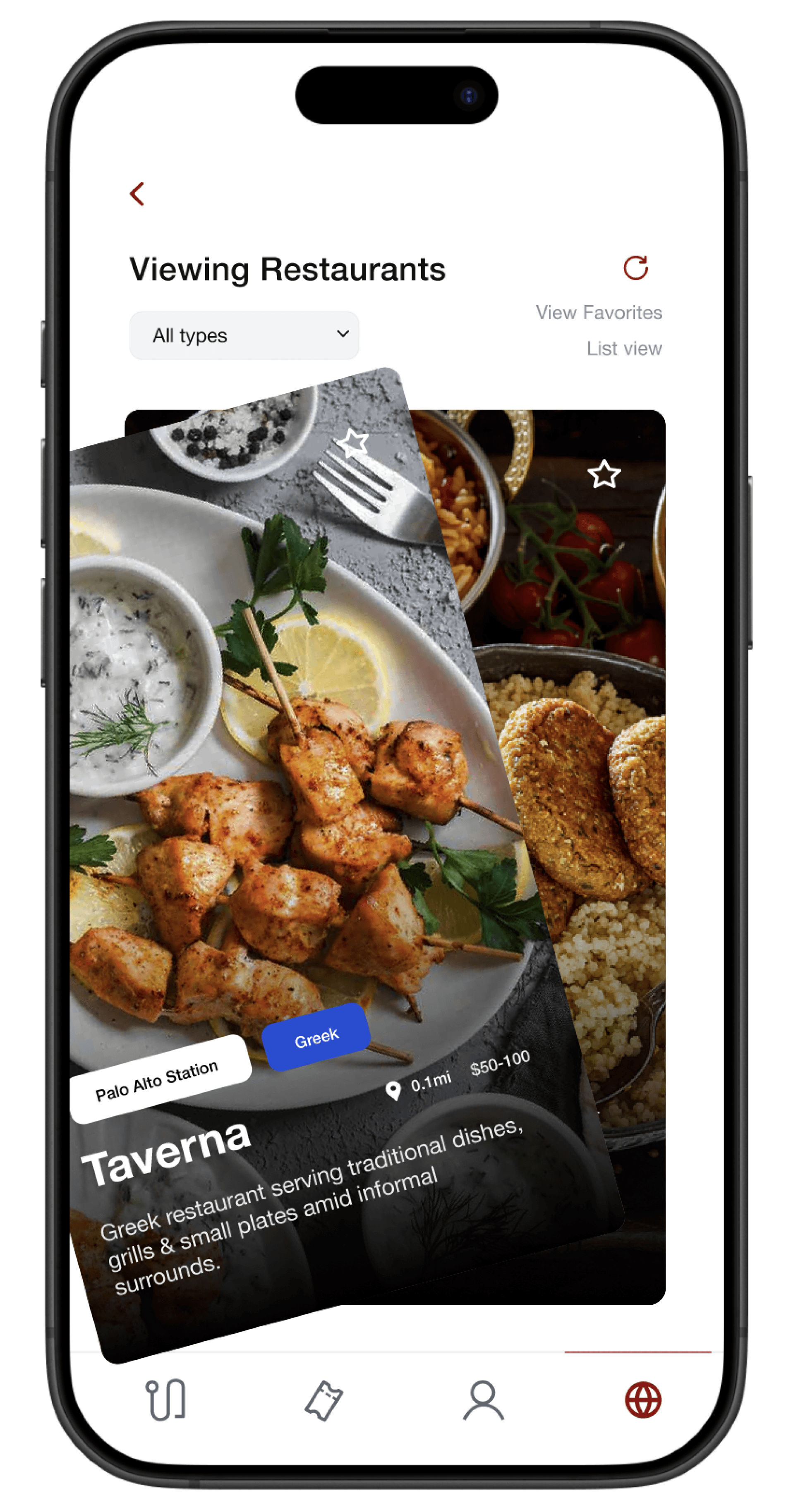
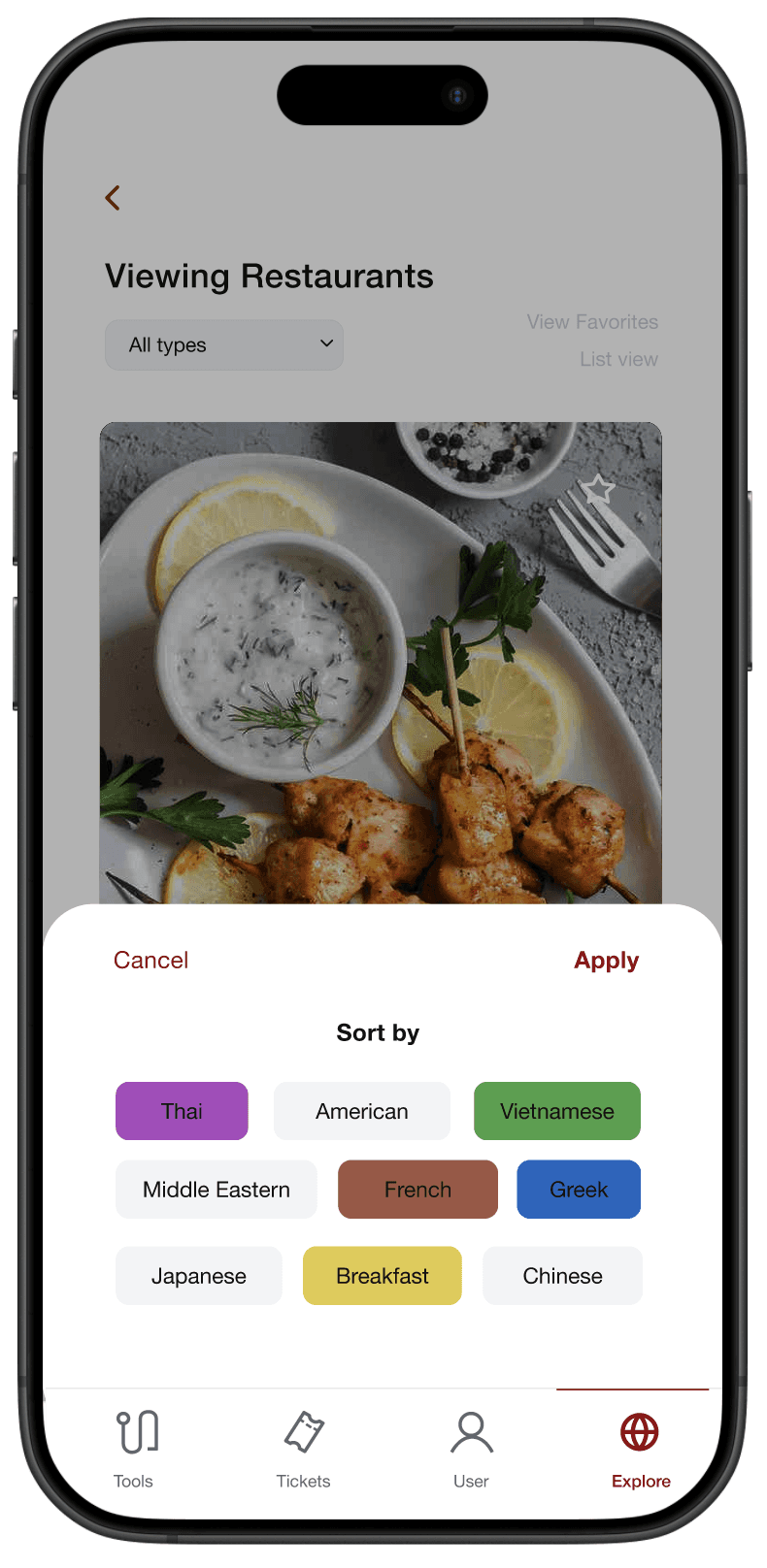
Filtering system for restaurants to help users narrow down choices